
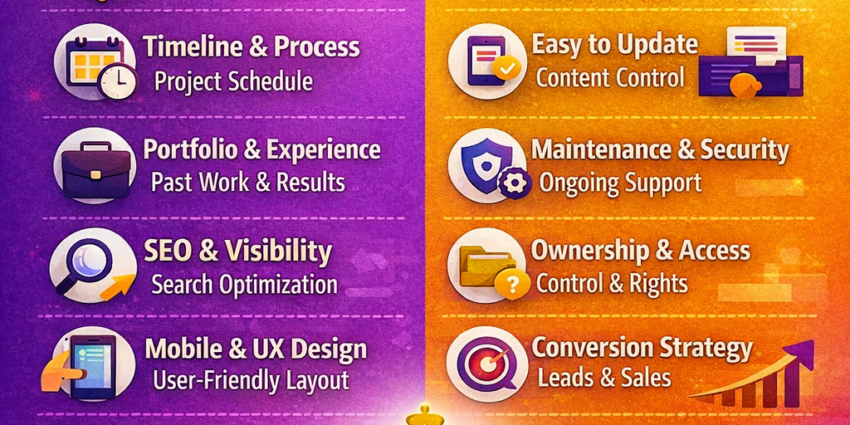
Choosing a web designer is one of the most important decisions a business can make in today’s digital-first landscape. Your website isn’t just an online brochure; it’s your storefront, sales team, marketing engine, and brand experience all rolled into one. A poorly executed site can cost you leads, credibility, and revenue, while a strategically built one can become your most valuable asset.
Before signing a contract, businesses should fully understand what they’re investing in. Here are the top 10 topics every business should evaluate before choosing a web designer.
1. Cost & Pricing Structure
One of the first, and most critical, questions is cost. But it’s not just about the initial price tag. Businesses need to understand what’s included and what isn’t.
Some designers offer low upfront pricing but charge extra for essentials like SEO setup, mobile optimization, or revisions. Others bundle services into a higher initial cost but provide more long-term value.
Ask about:
- Initial design and development fees
- Ongoing costs (hosting, maintenance, updates)
- Additional charges for revisions or new features
Transparency here is key. The goal is to avoid unexpected expenses down the road.
2. Timeline & Project Management
A website project without a clear timeline can quickly become frustrating. Businesses should look for designers who provide structured timelines, defined milestones, and clear communication throughout the process.
Important considerations include:
- Estimated completion time
- Project phases (design, development, revisions, launch)
- Communication frequency and tools used
A well-managed project ensures your website launches on time, especially if it aligns with a marketing campaign or product release.
3. Experience & Portfolio
A designer’s portfolio tells you more than any sales pitch ever could. Reviewing past work helps you assess design quality, functionality, and versatility.
Look for:
- Experience in your industry or similar business types
- Modern, clean, and user-friendly designs
- Case studies that show measurable success (traffic, conversions, engagement)
A strong portfolio demonstrates not only design skill but also the ability to solve real business problems.
4. SEO & Online Visibility
A beautiful website is useless if no one can find it. That’s why SEO (Search Engine Optimization) is a non-negotiable component of modern web design. Businesses should ensure their designer understands:
- On-page SEO (titles, meta descriptions, keyword structure)
- Technical SEO (site speed, indexing, schema markup)
- Optimization for emerging AI-driven search experiences
Your website should be built to rank, not just exist.
5. Mobile Responsiveness & User Experience
With the majority of users browsing on mobile devices, responsiveness is no longer optional; it’s essential.
A good web designer prioritizes:
- Mobile-first design
- Easy navigation across all devices
- Clear calls-to-action
- Fast, intuitive user journeys
If users struggle to navigate your site on their phone, they’ll leave, and likely never return.
6. Website Speed & Performance
Speed directly impacts both user experience and search rankings. A slow website can significantly reduce conversions and increase bounce rates.
Ask your designer about:
- Page load optimization
- Image compression and formatting
- Clean, efficient coding practices
- Core Web Vitals performance
Every second counts. Faster websites generate better results.
7. Content Management & Ease of Use
After your site is launched, you’ll likely want to make updates, whether it’s adding blog posts, updating services, or changing images.
That’s why it’s important to know:
- What platform your site will be built on (e.g., WordPress, Webflow)
- How easy it is to edit content
- Whether training or documentation is provided
You should feel confident managing your own website without relying on a developer for every small change.
8. Maintenance, Support & Security
A website isn’t a one-time project; it requires ongoing care. Without proper maintenance, your site can become vulnerable to security issues, outdated plugins, or performance problems.
Key questions to ask:
- Do you offer ongoing support or maintenance plans?
- Are backups and updates handled regularly?
- What security measures are in place?
Reliable support ensures your website continues to perform long after launch.
9. Ownership & Access
Surprisingly, many businesses overlook this step—and it can lead to major issues later.
Make sure you understand:
- Who owns the domain and hosting account
- Whether you’ll have full admin access
- If you can transfer your site to another provider if needed
You should always maintain full control over your digital assets. Avoid situations where you’re locked into a single provider.
10. Conversion Strategy & Business Goals
Ultimately, your website should do more than look good—it should drive results.
A strategic web designer will focus on:
- Lead generation (forms, calls-to-action)
- Sales funnels and user flow
- Analytics and tracking setup
- Aligning design with your business objectives
If your website isn’t generating leads or sales, it’s not doing its job. Choosing a web designer isn’t just about aesthetics—it’s about finding a partner who understands your business, your audience, and your goals.
The best designers go beyond visuals. They think strategically about:
- How users interact with your site
- How your site ranks in search engines
- How it converts visitors into customers
By evaluating these 10 key areas, businesses can make informed decisions, avoid costly mistakes, and invest in a website that truly supports growth. A great website isn’t an expense, it’s an investment. And when done right, it becomes one of the most powerful tools your business has.
Appsolute Web Design & AI Marketing Services
 Offices: Wherever You Are – I have a laptop and will travel
 Phone: 631-466-0461
 Website: AppsoluteSuccessApps.com/
 Email: info@appsolutesuccessapps.com